Dr. Irma Korinteli on a decade of AMR progress in Georgia
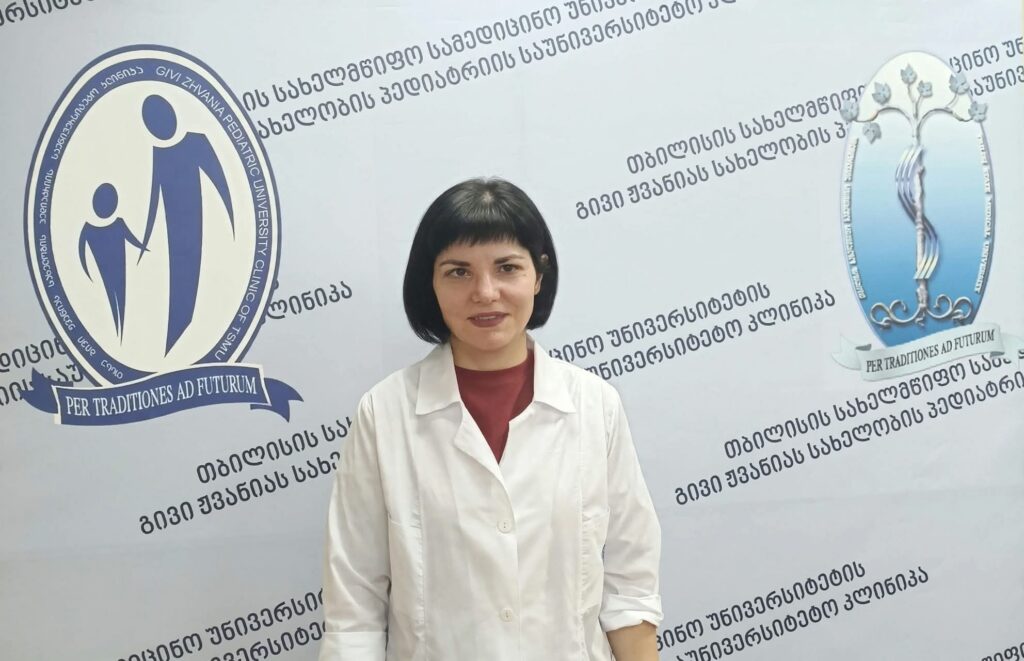
Dr. Irma Korinteli is a paediatrician, assistant professor at Tbilisi State Medical University, and one of the longest-standing members of the Global-PPS network in Georgia. Since joining the network in 2016, her research has fed directly into Georgia’s first national action plan against antimicrobial resistance (2017) and, more recently, into a nationally accredited continuing professional development (CPD) programme that has already trained over 200 Georgian physicians. She also regularly appears on Georgian television and social media to raise public awareness about antibiotic use. We spoke to her about that journey, the barriers that remain, and what she’d like to see from Global-PPS next.
Could you tell us a bit about yourself and your work?
I’m a paediatrician by training, with sub-specialties in paediatric emergency medicine and paediatric infectious disease. I’m an assistant professor at Tbilisi State Medical University, and since 2021 I’ve worked at the University Paediatric Hospital in Tbilisi, although my clinical experience now spans more than ten years, including time in private hospitals in the capital and in other regions of Georgia. Last year alone I treated more than 800 patients myself.
That hands-on clinical experience, combined with my background as a researcher through Global-PPS, is really what allows me to train and mentor other doctors through continuing medical education. I see myself first and foremost as a hands-on physician, and that is what makes it possible to translate research into something colleagues can actually use in their daily practice.
Why is tackling antimicrobial resistance so important, both in Georgia and globally?
AMR is one of the most urgent challenges of modern medicine, and the COVID-19 pandemic made it considerably worse. During the pandemic, we saw extremely high antibiotic use worldwide, driven by high rates of suspected bacterial co-infection, rapidly changing guidelines, and a lack of time to wait for full laboratory results. The WHO had projected that by 2013 we would be living in a post-antibiotic era with resistance-related mortality falling — instead, the pandemic reversed much of that progress, in Georgia and elsewhere.
How has Georgia’s approach to antibiotic prescribing evolved since then?
The real turning point came in 2014, when antibiotics were reclassified as prescription-only medicines. Before that, they were freely available over the counter in pharmacies and shops. In 2017, Georgia adopted its first National Action Plan on antimicrobial resistance, developed by the Ministry of Health in line with WHO recommendations. It focused on raising public awareness, controlling pharmaceutical distribution, monitoring prescribing, and educating physicians.
Since then the strategy has kept evolving: in 2022, antibiotics became available only through electronic prescription, which was a major step in reducing inappropriate use and shifting responsibility and monitoring onto physicians themselves. That same update also brought the human, veterinary and environmental sectors together under a One Health approach, and this was strengthened further in a 2024 revision. So in twelve years, we’ve moved from antibiotics being sold like any other product to a fully regulated, monitored prescribing system.
Your own research is closely tied to that first national action plan. Could you tell us more?
It’s a moment I’m genuinely proud of. The 2017 national strategy drew on the very first national-level data on antibiotic use in Georgia, and I was part of the team that produced it. I’ve been part of the Global-PPS network since 2016, working with Ann Versporten, Professor Herman Goossens and the WHO collaboration team, alongside Professor Karaman Pagava of Tbilisi State Medical University, who has been our scientific supervisor from the very first survey.
Since then, we’ve grown from a handful of hospitals to more than 30, surveying over a thousand patients across both inpatient and, more recently, outpatient point prevalence surveys. My PhD, completed in 2019, was also built on Global-PPS data: it described the general situation of antibiotic use in Georgia and concluded that continued, rational monitoring with a gold-standard tool like Global-PPS is essential for stewardship.
That research eventually became the basis for a national CPD programme you initiated. Why is this programme necessary?
Year after year, our Global-PPS reports revealed the same key patterns: total antibiotic prevalence in Georgian hospitals of more than 80%, heavy reliance on Watch-group antibiotics rather than Access-group ones, and very limited use of targeted, as opposed to empirical, treatment. Seeing that data so clearly, repeatedly, is what convinced us that reporting on it wasn’t enough. Physicians needed to see it themselves.
So together with colleagues in the postgraduate education department at Tbilisi State Medical University, and with accreditation from the Ministry of Health, we built a national CPD programme. Over the past two years we’ve run six seminars reaching more than 200 doctors, not only in Tbilisi but in other regions of Georgia too, with two further sessions planned for this September. In each seminar we walk physicians through the Global-PPS data, what it shows in their own hospital, and how it compares to the national and regional picture. But the real goal is to remind them of their own role in antimicrobial stewardship.
Read more about the CPD programme in Dr. Korenteli’s earlier feature: From Survey Data to the Consultation Room.
How receptive have physicians been to seeing that data about their own prescribing?
Remarkably open. Global-PPS’s interactive reports let us compare data at hospital, country and regional level, and physicians find that genuinely eye-opening. In the past, all they received were top-down messages from the Ministry of Health or department heads saying prescribing rates were too high, without any concrete data showing what that actually looked like in their own ward. Now that they can see their own patterns next to national benchmarks, they’re far more open to discussion, and to feedback on the barriers they face when prescribing. We’re already planning further collaboration with them on data entry and collection.
What role does Global-PPS play in your work, and why do you find it such a valuable tool?
Global-PPS is, quite simply, the gold standard for antimicrobial stewardship monitoring, at both hospital and country level. What impresses me most is the visualisation: being able to compare antimicrobials used, quality indicators and guideline compliance across hospital, country and regional levels makes an enormous difference when presenting to colleagues. The newer outpatient module has been just as valuable — if anything, I find outpatient data even more revealing, because it captures things like social pressure on prescribing decisions in a way inpatient data can’t.
Is raising awareness about the sensible use of antimicrobials part of the Georgian national action plan?
Raising public awareness is part of our national strategy, but I also feel it’s a responsibility I have as a doctor, not just something for the Ministry of Health or public health agencies to handle. I talk to my own patients about it, of course, but I also use social media and, when I get the opportunity, national television, to explain things like watchful waiting: if a child has a fever but no inflammatory markers, it’s normal — and recommended — to check again after 72 hours rather than starting antibiotics immediately. That’s not a doctor avoiding treatment; it’s good practice. I believe that kind of direct, practical education has to come from physicians ourselves, not only from government messaging.
What do you see as the biggest remaining barriers to appropriate antibiotic use in Georgia?
A few stand out. First, availability: Access-group antibiotics are limited in Georgia, for practical purposes we only have aminopenicillins like amoxicillin, without first- or second-generation cephalosporins, even though both are standard in national and international guidelines for surgical prophylaxis and first-line treatment. That leaves physicians with far fewer rational choices than they should have, pushing prescribing toward the Watch-group.
Second, the gap between guidelines on paper and guidelines in practice: our Global-PPS data shows high guideline compliance but weaker performance on quality indicators, which tells us implementation isn’t always as flexible or up to date as it should be. And third, social pressure — particularly around paediatric care, where parents expect a fast response and trust in watch-and-wait strategies is still limited. Managing that expectation, especially with children, is a real and constant challenge for prescribers.
Finally, do you have any feedback or recommendations for the Global-PPS team?
Global-PPS remains, for me, the gold-standard tool for monitoring at both hospital and country level, and we intend to keep using and expanding our participation. If I could suggest one improvement, it would be adding a few more granular quality indicators, especially for paediatric practice: duration of illness before treatment, and chest X-ray findings such as infiltration versus consolidation. Both are critical when treating young children, particularly those under a year old, and capturing them would make the tool even more useful for paediatricians like myself.