Insights from the Global-PPS Annual Meeting
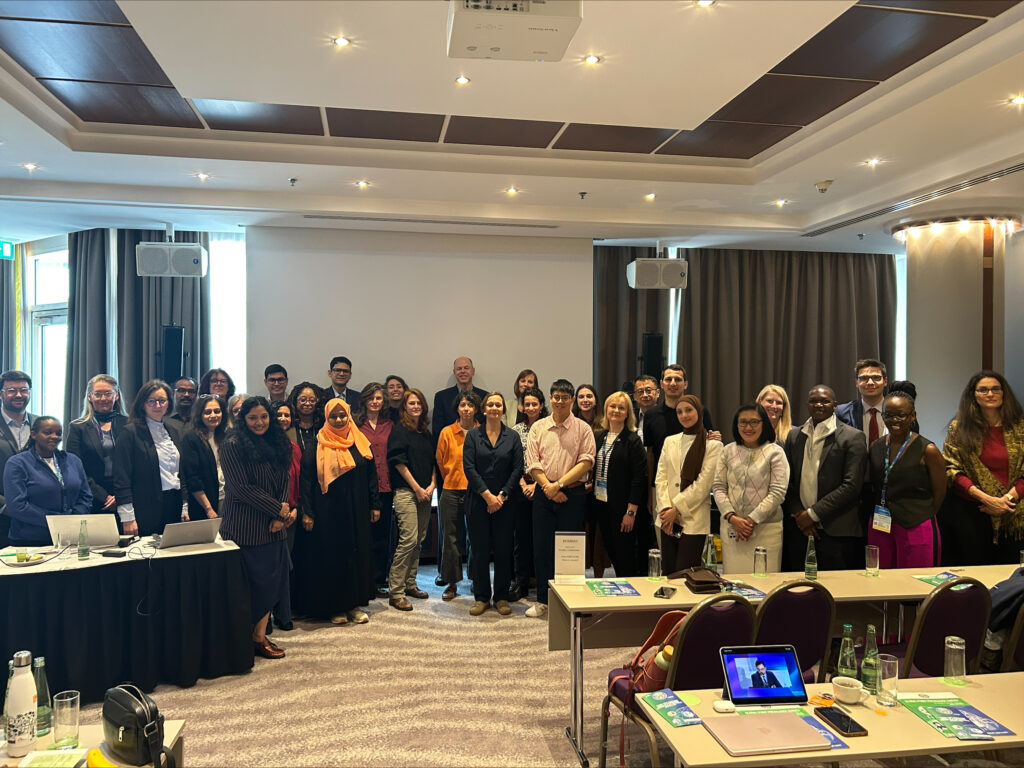
Following our initial coverage, we are pleased to share this in-depth look at Global-PPS’s annual meeting, held on 17 April in Munich, Germany. With over 270 participants joining from around the world — in person and online — the event indeed served as a vital forum for healthcare professionals, researchers, and collaborators to share experiences, tackle shared challenges, and draw lessons from one another.
The meeting was also an opportunity for the Global-PPS team to engage directly with participating sites and discuss ongoing activities and gather practical insights into future needs, and following exchanges with the Philippines team, we are supporting the promotion of the 34th International Congress on Antimicrobial Chemotherapy (ICC), taking place from 7 to 9 December 2026 in Manila. Participants from the Asia-Pacific region are encouraged to submit abstracts showcasing their Global-PPS results and antimicrobial stewardship initiatives. The deadline for abstract submission is 15 June 2026.
Below we present some of the key takeaways and perspectives shared by speakers during the meeting. You’ll also find a link to the recordings of their presentations.
- Dr Kourouma reported that the Global-PPS was successfully conducted in 60 facilities in Guinea, covering over 3,000 outpatient records. Effective communication, active engagement with facility staff, and rigorous planning were critical in overcoming key barriers such as documentation gaps and time pressure. The survey generated valuable insights to inform future stewardship actions.
- Dr Hopkins highlighted lessons from the Fleming Fund’s support to multiple national antimicrobial use (AMU) surveillance systems across Asia and Africa. These experiences demonstrated the usefulness of PPS methods, including the Global-PPS, for AMU surveillance across diverse sites and regions, while emphasizing the need for complementary antimicrobial resistance (AMR) data to fully inform stewardship efforts.
- Dr Lugo described the participation of a network of 12 private hospitals in Mexico in the Global-PPS during 2024 and 2025. Their experience showed that committed AMS teams and strong institutional support were essential enablers for conducting the survey across varied hospital contexts. Future priorities include strengthening AMS programmes, ensuring continuous training, and systematically providing feedback to prescribers.
- Dr Abdo explained that MSF has supported 28 facilities since 2024 in implementing the Global PPS and developing treatment guidelines. Global-PPS results were complemented with additional tools to develop tailored AMS action plans. Feedback from the field was used to adapt the system to the humanitarian setting and support future work, including efforts to automatically compare Global-PPS results with MSF treatment guidelines.
- Dr Rahmadanti and Dr Limato shared findings from the drive-AMS Indonesia programme, which demonstrated the usefulness of the Global-PPS in identifying gaps in antibiotic prescribing practices. The drive-AMS approach provided stepwise guidance for stewardship implementation, while highlighting the critical role of leadership commitment and continuous reinforcement to sustain AMS uptake.
- Prof Paiva described the experience in Portugal, where 16 hospitals participated in drive-AMS Europe, which has since been adopted within the Portuguese National Health Plan 2030: https://pns.dgs.pt/. What began as a temporary project has helped establish permanent infrastructure, enabling sustained strengthening of AMS programmes across multiple hospitals.
- Dr Garcia gave an update on the activities in a long-standing, active network of hospitals in the Philippines. This network, coordinated by the Philippine Department of Health, has participated in the Global-PPS since 2017, with 61 hospitals involved in 2025. Key facilitators included committed leadership and engaged healthcare staff, while limited time and staffing remained important barriers. Over time, several AMS actions were implemented, such as the establishment of realistic, measurable targets for antimicrobial stewardship programs of participating sites and the development of the National Surgical Antimicrobial Prophylaxis Clinical Practice Guidelines.
Recordings of the meeting remain available in the dissemination section of the G-PPS website via this link.