
From Policy to Practice: Dr. Amy Rahmadanti on Global-PPS in Indonesia
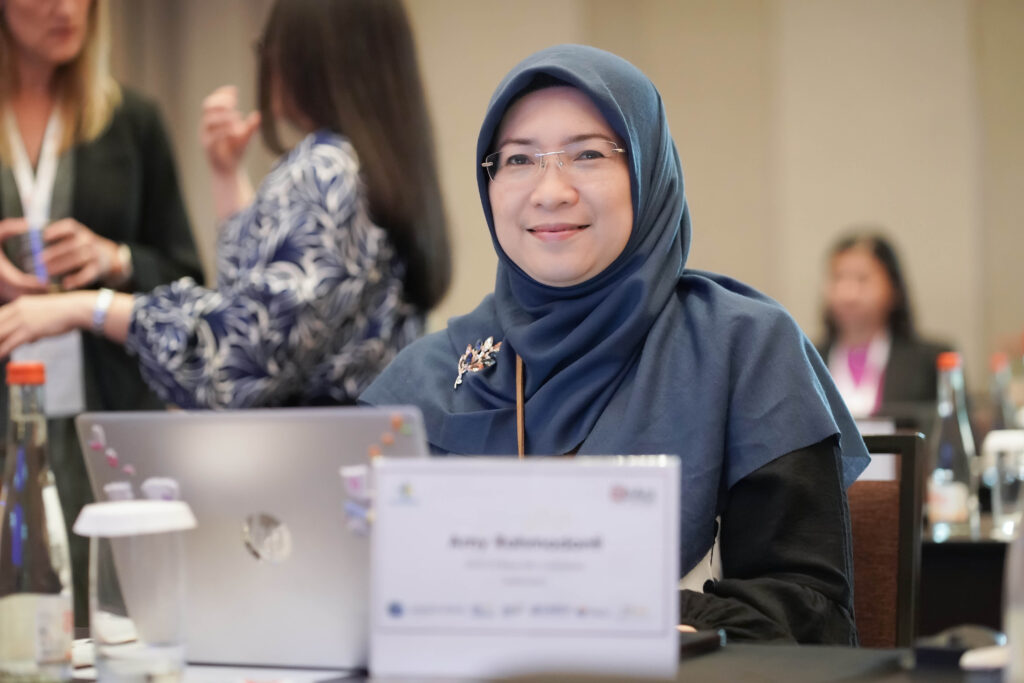
In Indonesia, Global-PPS is now part of the official guidelines of the Ministry of Health in the fight against antimicrobial resistance. Following Dr. Licia Limato’s testimonial on how Global-PPS is applied in practice, Dr. Amy Rahmadanti now provides insight into how the tool is used at the policy level. Dr. Rahmadanti is a public health expert at the Ministry of Health and has been closely involved in implementing Global-PPS in Indonesia. She explains how the tool can, among other things, serve as an alternative method for monitoring antimicrobial use and resistance in hospitals with limited resources, and how it supports broader national strategies on IPC and AMR.
ご自身のことや、これまでのご経歴について少しお聞かせいただけますか?
Dr. Rahmadanti: “My name is Amy Rahmadanti. I’m a medical doctor and public health specialist. I have worked at the Ministry of Health in Indonesia since 2011, and as of 2024, I’m responsible for the AMR (Antimicrobial Resistance) and IPC (Infection Prevention and Control) programs at the ministry. Before all of that, I managed hospital accreditation and quality of care.”
Why is tackling AMR so important? And how does AMR affect public health in Indonesia?
Dr. Rahmadanti: “It’s important because antimicrobial resistance increases the mortality and morbidity of patients and health care service costs. We conducted a study on this topic and found that patients with AMR had longer hospital stays. We also conducted an economic impact analysis of AMR, which showed increases in health costs, productivity losses, and the economic burden of AMR”
How is the healthcare system organized in Indonesia, specifically regarding AMR and comparing primary and hospital care?
Dr. Rahmadanti: “The healthcare delivery system in Indonesia comprises primary care, including public health centers, general practitioners, and primary care clinics, as well as referral care, encompassing specialty clinics and hospitals at the secondary, tertiary, and national referral levels. Hospitals are categorized into four classes based on their resources, including the number of beds, infrastructure, technology, and available specialties. Antibiotics may be prescribed in both primary healthcare centers and hospitals. However, the selection of antibiotics available in primary care is limited, while hospitals have access to a broader range of antimicrobial agents. According to regulations, the hospitals assign a responsible person/organization for the AMR program. Depending on resources, they may have an AMR team or committee. Some hospitals have the AMR committee integrated with Infection Prevention and Control (IPC).”
Could you explain how the process evolved for the Global-PPS to be adopted in the national surveillance system?
Dr. Rahmadanti: “In 2024, we organized drive-AMS training sessions that included instruction on the Global-PPS. Ten participating hospitals learned to use the Global-PPS tool during these sessions, prompting the Ministry of Health to engage with the Fleming Fund to introduce Global-PPS as an alternative method for evaluating antimicrobial use. In 2025, in collaboration with the Fleming Fund, we organized a Global-PPS workshop for an additional ten hospitals.”
“According to regulations, hospitals are required to evaluate antimicrobial use by assessing both the quantity and quality of antimicrobials, utilizing the Defined Daily Dose and Gyssens methods, respectively. However, not all hospitals possessed the necessary resources to implement the Gyssens method for evaluation. Upon learning about the Global-PPS approach, we considered whether it could serve as a viable alternative. Since only a subset of hospitals participated in both training sessions and became familiar with the PPS protocol, we developed guidelines in Indonesian and adapted them to comply with national legislation.”
With the G-PPS protocol and collection forms now being part of the guidelines sent to Indonesian hospitals, are hospitals obliged to follow these guideline documents? What outcome do you expect from this action?
Dr. Rahmadanti: “Hospitals are not obliged to use Global-PPS yet. There is already an administrative regulation that requires hospitals to monitor antimicrobial use through quantitative and qualitative methods using the Gyssens system, so Global-PPS is offered more as an alternative method.”
“The Ministry of Health initially introduced the program to 20 hospitals through AMS Drive Training and Fleming Fund PPS training. Following these sessions, we organized online monitoring meetings to discuss implementation progress and address any challenges encountered by the hospitals. The guidelines have been widely disseminated through hybrid meetings and digital platforms, including WhatsApp groups and provincial and district health offices. In the future, the Ministry aims for hospitals to conduct a Global-PPS at least annually to evaluate antimicrobial use.”
What is drive-AMS Indonesia exactly?
Dr. Rahmadanti: “drive-AMS is a structured approach designed to enhance antimicrobial stewardship (AMS) at the facility level, particularly within hospitals. Until last year, we monitored 10 hospitals in Indonesia in collaboration with the drive-AMS team and requested that they share their experiences, detailing the interventions implemented and the outcomes achieved. These results have already been disseminated to 38 additional hospitals.”
What next steps do you hope to take to improve the AMR situation in Indonesia?
Dr. Rahmadanti: “This is a critical question. In my view, it is essential to address both infection prevention and control (IPC) and antimicrobial resistance (AMR) simultaneously. Simply reducing antibiotic use is insufficient, as resistance may still develop through alternative mechanisms. One of the priorities is strengthening IPC. This year, we plan to provide targeted capacity-building for at least 3 hospitals in each province, continuing through 2028, to improve understanding and implementation of IPC at the hospital level. In parallel, we will also provide technical assistance on AMR programs to provincial hospitals this year and to district hospitals next year.”
“Another important focus is diagnostic stewardship. Only a limited number of hospitals can perform culture and susceptibility testing, so we plan to map the capacity of public and private laboratories and develop a referral model between hospitals and laboratories to improve access to diagnostic testing. We will also continue strengthening surveillance through the Ministry of Health reporting system, monitoring resistance data, Antimicrobial Use data (DDD data, the Gyssens analysis, and PPS), and evaluating how hospitals implement their AMR programs. In addition, we are planning a program to respond to outbreaks of antimicrobial-resistant pathogens in healthcare facilities and hope to organize another batch of the drive-AMS training this year with support from WHO and the Netherlands Ministry of Health.”
Global-PPSコミュニティの皆さんに、他に何かご意見やフィードバック、アドバイスはありますか?
Dr. Rahmadanti: One indicator in our national development plan concerns the use of empirical antibiotics in hospitals. This metric assesses clinician adherence to empiric antibiotic administration in line with hospital clinical guidelines. It presents challenges because it depends on clinician compliance and on variability in antibiotic selection among physicians. In the Global-PPS, this compliance is also evident in the data results. Last year, we used PPS data to evaluate several hospitals, enabling them to avoid additional data collection by leveraging the information they already had.