Behind the technology: our IT specialist talks about data security, user experience, the use of AI, and much more.
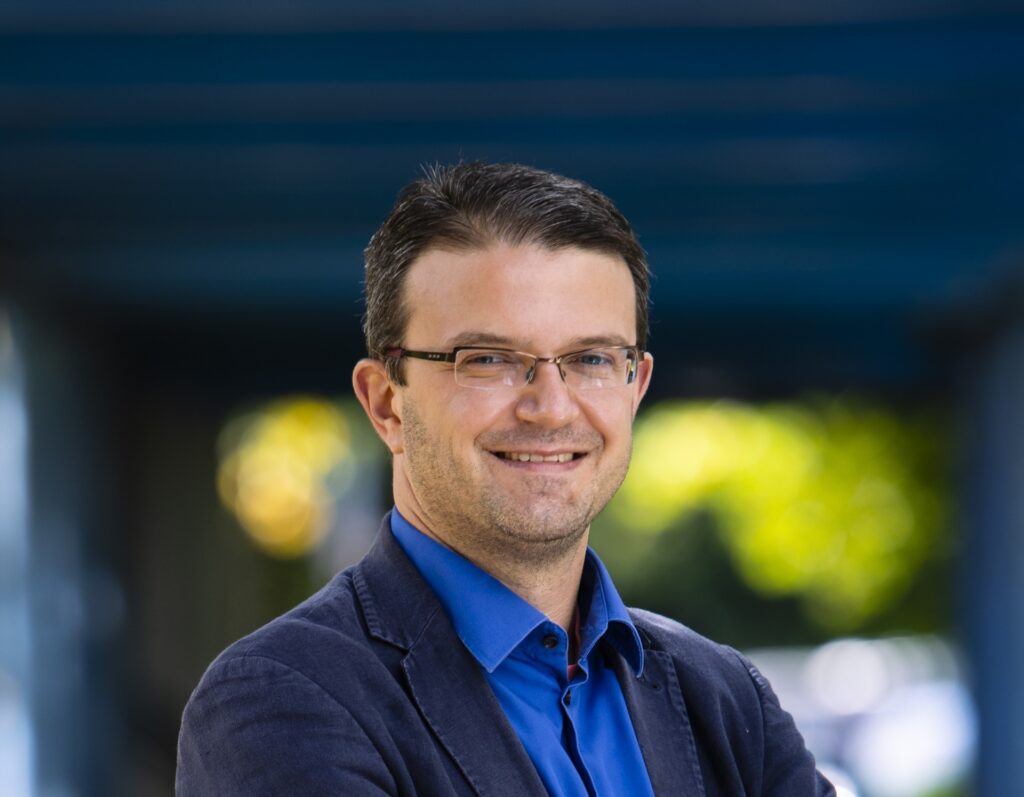
In this interview, Jimmy Keustermans, software engineer within the Global-PPS team, takes us behind the scenes of the technology powering the platform. He explains how IT supports data security, user experience, and continuous innovation, while also sharing his vision on future developments such as artificial intelligence, new modules, and stronger integration with other platforms. Jimmy also highlights the importance of user feedback and collaboration in making Global-PPS a future-proof tool in the fight against antimicrobial resistance.
Could you briefly introduce yourself and tell us about your role within the Global-PPS team?
“I’m a software engineer at the Global-PPS project, and my main responsibilities are to translate user requirements from the end users or the domain experts at the project itself to a technical solution. I’m involved in the whole software development life cycle of Global-PPS: data governance, cybersecurity, system architecture, technical analysis, implementation and design. And of course user experience is really a key point in what I do. The platform has improved significantly over the past five years and usability is a permanent point of attention.”
Can you give an example of a recent tool or platform feature you developed?
“A good example is the online reporting functionality in the Global-PPS platform. Previously, users generated static reports of 50 to 60 pages, which made it difficult to find the information they needed. We introduced interactive online reports that are split into different sections, allow users to apply filters, and let them export graphs and tables for presentations.”
From an IT perspective, what happens behind the scenes when participants enter data in the Global-PPS tool? What happens if discrepancies are found?
“From a high-level perspective, the process is actually quite straightforward. A user logs in, their credentials are authenticated, and once they’re validated, they can enter data into the platform. The data is transmitted over a secure connection, ensuring it is protected throughout the process.”
“When the data reaches the platform, a series of validation checks is performed to make sure the information is complete and consistent. Maintaining data quality is a key part of the process. While participants are responsible for the quality of the data they enter themselves, the platform’s benchmarking results also depend on data submitted by all other users. That’s why the Global-PPS team invests considerable time in monitoring data quality, both by implementing validation checks in the application and by performing manual data reviews.”
“If irregularities are found, the data webmasters contact the end user to clarify the issue. If needed, they can make corrections themselves, but always in consultation with the user.”
“Once everything has been validated, the data is stored in the University of Antwerp’s data centre. It’s not stored on someone’s laptop or local computer, but within the university’s secure infrastructure, which follows its own security policies and safeguards.”
You already touched briefly on data security and privacy. These are increasingly important in healthcare. How does Global-PPS ensure that participant data remains protected, and who has access to these data?
“In my opinion, data privacy and data security start with awareness: people need to understand the importance of protecting data. The University of Antwerp experienced a cyber-attack in 2019, so there is a high level of awareness across the university. Since the Global-PPS platform is part of the university’s infrastructure, we work closely together to make sure everything is secure.”
“We apply a security-in-depth approach, which you can compare with an onion. There are different layers of protection, and each layer protects the core, which in our case is the application and the database. This starts with the physical layer, for example the data center itself, which is protected through access control, locks, and camera surveillance. Other layers are network security, with firewalls, VPNs, and intrusion detection systems. There is also an important human layer, because people need to be aware of security risks and potential malicious actors.”
“At the application level, we have measures such as password policies, coding practices, role-based authentication, and multi-factor authentication is also planned for the future. On the data security level, all stored data is encrypted, meaning that even if someone gained access to the database, they would not be able to read the information.”
“Regarding data privacy, we never share data with third parties unless there is formal approval from the parties involved. We ensure that the platform is compliant with regulations like GDPR, and we work in close cooperation with the legal department of the University of Antwerp and its Data Protection Officer at the Security Department. So, there’s many aspects that show that we are very serious about data security and data privacy.”
So only the Global-PPS researchers have access to the data?
“Yes, but it is important to note that the data itself is pseudonymized. There is no direct link between a patient in a hospital and a patient in the Global-PPS system. For each patient, a synthetical ID is generated, guaranteeing anonymity. The hospital can link the ID number back to their own patient files, but there are no names stored in the Global-PPS database. A patient cannot be identified based only on the data in the platform. The end users only have access to their own raw data. Researchers can work with the available data, but access to the original data remains controlled.”
What are some of the biggest challenges in maintaining and developing a global platform such as Global-PPS?
“For me, the most complex part is the software engineering process itself. I often compare developing an application with building a tree house versus building a real house. Everyone can build a tree house, but building a proper house requires much more: you need to think about electricity, stability, security, and many other aspects.”
“Global-PPS started as a simple project, more like a tree house. But as the application grew and became more complex, we reached the point where it needed to evolve into a proper house. The challenge is not only building the application itself, but also managing things such as security, scalability, resilience, and handling complexity. Some of these aspects are prioritized, as we want to make sure the system is future proof.”
“For example, what will you do when hundreds or even thousands of users simultaneously access the platform? How do you manage complex validations? Or how do you protect the system against hackers? This kind of engineering makes developing a platform like Global-PPS much more complex than simply creating screens and storing data in a database.”
Do you see opportunities for artificial intelligence within Global-PPS? And if so, what might they look like in the future?
“It is difficult to predict the future of AI. There is a lot of hype around it, but when we apply it in practice, we also see its limitations. We need to make sure that AI performs actions correctly.”
“We already use AI tools on an operational level to improve efficiency and productivity. Within the platform, I see opportunities for example in supporting users during data entry, by detecting possible incorrect or inconsistent input and improving data quality. In the longer term, AI could also help with data analysis, for example by adding information to reports or helping users interpret graphs.”
“However, we are conservative when it comes to autonomous AI agents. Because data privacy and data security are very important, we do not want AI systems to act independently or risk exposing sensitive data. AI will probably become part of the platform, but always with security and privacy in mind.”
Looking ahead, what developments or innovations can the Global-PPS community expect from the IT team?
“I think adding new modules will be one of the most interesting developments. This needs to be driven by the researchers and domain experts, but it would be very valuable if Global-PPS could support the whole AMR life cycle, from detection and surveillance to stewardship activities.”
“We are also continuously improving the reporting infrastructure. Currently, users have interactive reports with filters, but it would be interesting to make reporting even more dynamic in the future, for example by allowing users to create their own reports, similar to tools like Power BI. This is challenging, but definitely worth exploring.”
“Furthermore, we’re enhancing the user experience and adding additional security measures. For example, we are implementing post-quantum cryptography to make sure the data remains protected against future quantum computer attacks. This is a global challenge, and together with the university, we are implementing these new security measures, possibly already this summer.”
Is there anything else you would like to share with the Global-PPS community from an IT perspective?
“First of all, do not hesitate to communicate your needs or ideas to the Global-PPS team. If users provide suggestions, the platform can only become better and better. We’re very serious about their feedback, we already made adaptations to the application and platform that came out of the field.”
“Secondly, antimicrobial resistance is a major global problem, with many people dying from it each year and predictions that this will increase. I believe Global-PPS is one way to help fight this problem. It is also free to use and the support is free, which is quite unique.”
“So my message would be: spread the message! Tell others about it, so that more people can benefit from Global-PPS.”