
Antimicrobial Stewardship Amid Conflict: How MSF Syria Uses Global‑PPS to Improve Care
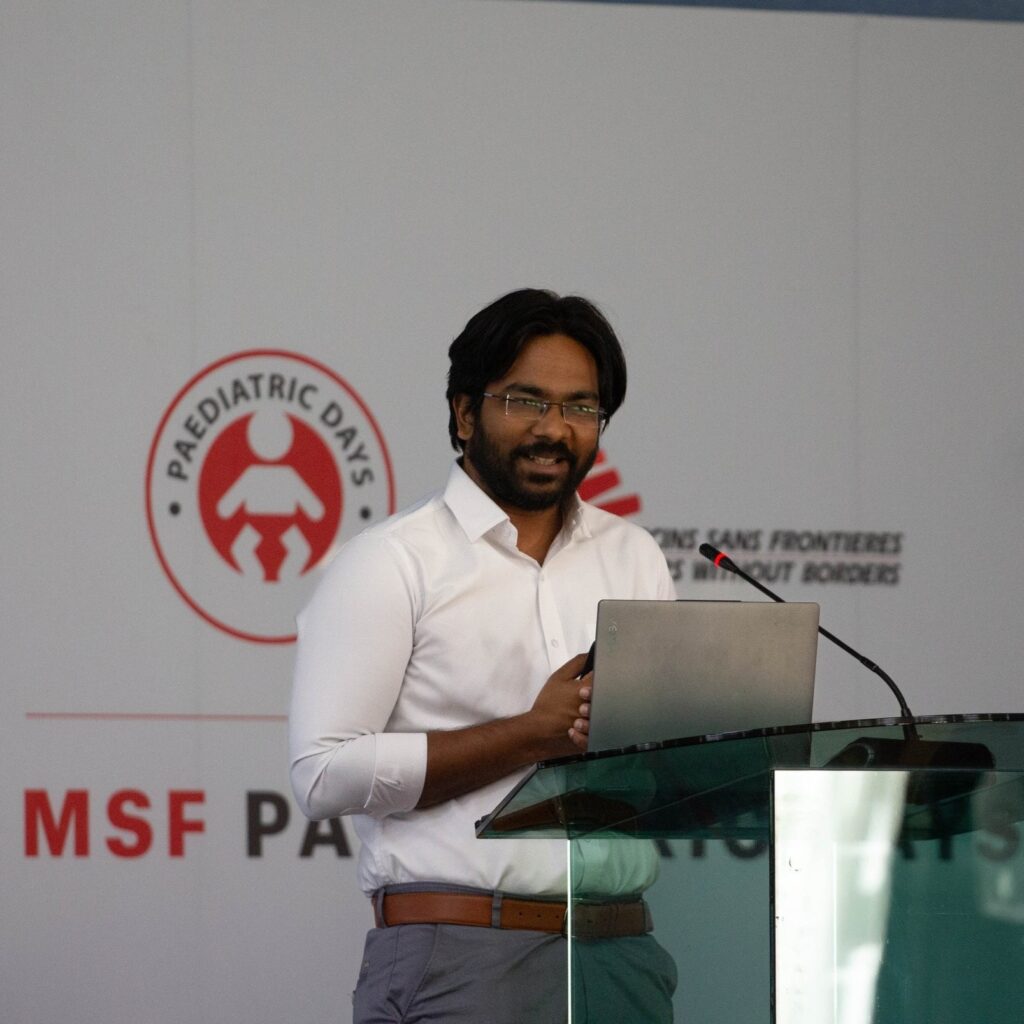
Médecins Sans Frontières (MSF) Syria operates in a highly complex and rapidly changing context, where healthcare delivery faces many challenges and antimicrobial stewardship (AMS) is particularly important. In this interview, Dr. Karan Parikh shares his experience using the Global-PPS survey to better understand antimicrobial use in the facilities MSF supports and reflects on the practical realities of applying such tools in this unique setting.
Could you tell us a bit about yourself and your professional background?
Dr. Karan Parikh: ‘My name is Karan Parikh, I’m a trained medical doctor with a master’s in public health, focusing on humanitarian health and epidemiology. I have worked with MSF before in India, and for the last two years I have been working as an epidemiologist here with MSF in Syria Mission.’
Can you describe the humanitarian situation in Syria and how it affects access to primary healthcare and essential medicines?
Dr. Karan Parikh: ‘Syria has been through a lot, especially since 2011. Since the civil war started, there has been constant violence across many parts of the country which escalated into multiple large issues. These 14 years of war have also destroyed healthcare infrastructure and millions of people are still in need of direct humanitarian assistance. Many people have been living in deteriorating conditions in overcrowded displacement camps and healthcare facilities are under resourced, understaffed and there’s little access to quality medicine. And then there’s also the lack of overall healthcare governance, with the 2024 transition government restructuring resource distribution and the focus on the North of Syria shifting towards the rest of the country. It’s a very complex humanitarian emergency which may be easy to overlook since currently the violence is limited to certain parts of the country.’
What is then the role of MSF in Syria in supporting primary care in the country?
Dr. Karan Parikh: ‘Until 2024, we were operating as MSF in northwest Syria, mainly in Idlib and northern Aleppo. We supported several primary health care centers and mobile clinics through local partners, and we were also providing maternal and child health care in several facilities.’
‘Since January 2025, we’ve expanded to other parts of Syria and are now based in Damascus. From there, we support primary and secondary health care services in other governorates as well. Our focus remains on primary health care and maternal and child health, with particular attention to psychosocial support and comprehensive care at primary and secondary levels.’
Why is antimicrobial prescribing a critical issue in crisis areas? And what are the main challenges clinicians face in prescribing antimicrobials appropriately in these settings?
Dr. Karan Parikh: ‘There are quite a few drivers of antimicrobial resistance as there would be in any place, but the complex conflict-related factor adds on top of any of the other drivers that would be present in a weak health system. These populations have limited access to public health services, clean water, sanitation or proper living conditions, leading to a constant state of physical and emotional vulnerability and ultimately making them less likely to receive quality treatment in time. Apart from that, since the war broke out. Many were targeted during the war, while many could not complete their studies. The prolonged civil war also led to an overall deterioration of the economy contributing to poor working conditions, lack of essential supplies and low salaries pushing many to seek safety and better opportunities outside the country. This lack of qualified medical professionals and the limited availability of drugs lead to inappropriate antibiotic prescriptions because many patients are often treated by undertrained staff or volunteers with limited clinical experience.’
‘On the other hand, there’s the inadequacy of the healthcare system in general, lacking regulation when it comes to antimicrobial prescribing and thus feeding into antimicrobial resistance. For example, there can be a lot of over-the-counter access to antimicrobials in the private sector, which people seek out because of the lack of doctors and the public sector not being able to manage the demand for these medications.’
What motivated you to use the G-PPS outpatient methodology, and was it suitable for assessing antimicrobial use in humanitarian and low resource outpatient settings?
Dr. Karan Parikh: ‘Global-PPS was suggested to us by our Antimicrobial Resistance advisor who has been supporting us throughout the implementation of this survey as a way to monitor our quality of care. We chose the outpatient module because our projects were mainly focused on providing primary healthcare. We had planned to expand it to inpatient facilities, but after the first round in November 2024 the context changed. More generally, however, monitoring antimicrobial prescriptions is a key part of our quality indicators of care. We had done some prescription audits before, but we struggled to estimate overall antimicrobial use, whether they were being over- or under-prescribed, or appropriately prescribed. There’s very limited literature from Syria due to the prolonged conflict, which made it harder to make solid operational recommendations. The Global-PPS seemed like a straightforward, standardized tool that we could adapt to our context and use to generate practical, actionable results more efficiently.’
How did participants perceive the Global-PPS? Did they find it beneficial or practical in their settings? Or were there any challenges?
Dr. Karan Parikh: ‘There were several challenges, although these were not really related to the PPS tool itself, but again rather to the context we were in. After we conducted the survey, we couldn’t provide feedback to the teams on time because from December 2024 to April 2025 we were in a heightened emergency phase. During that period, we stopped supporting two facilities, and within the following months a couple others also stopped operating.’
‘Later on, we analyzed and compiled the data, and the results were found to be quite useful. Useful enough that we’re planning to repeat it this year, but with a much shorter feedback loop so projects can quickly use the results to strengthen stewardship activities.’
‘More broadly, antimicrobial resistance activities are often still seen as a bit of a side project when there aren’t dedicated resources for them. Making sure that these are perceived as useful and that findings are taken along in projects moving forward is quite a challenge in humanitarian settings, where long-term initiatives are complicated because of these quickly shifting contexts.’
What were the most important findings from the survey, and how have these results helped inform antimicrobial stewardship efforts within MSF supported facilities?
Dr. Karan Parikh: ‘Before the G-PPS, we mostly relied on pooled estimates from other countries, which don’t really reflect the very specific context in Syria. This survey gave us one of the first more concrete estimates of how many patients are being prescribed antibiotics in the facilities we support.’
‘At the facility level, we also identified some more specific patterns, for example, certain conditions receiving a higher proportion of antibiotics, or children being prescribed more antibiotics for some infections than others. These kinds of findings allowed us to discuss the results with the teams, review clinical guidelines and treatment protocols, and gradually improve the quality of care. The goal is not simply to say something is over- or under-prescribed, but to make sure the right patient receives the right treatment at the right time.’
How will you proceed after the first data-collection with Global-PPS? Will there be an evaluation, will you use another method using Global-PPS or even another tool next time around…?
Dr. Karan Parikh: ‘I think this activity is helping us achieve two goals. The first is operational: using the survey in a way that can provide timely and actionable recommendations for the facilities we support, improving the quality of care for patients in places where access to healthcare is limited. That’s why we’re planning to repeat it annually; it’s already included in our planning. The second goal is more about documenting the experience of implementing this in a conflict setting. We want to publish more academic work on our approach and results and are hoping it can be useful for other MSF contexts and similar settings.’
Any other insights, feedback, or advice you would like to share with the Global-PPS community?
Dr. Karan Parikh: ‘We really appreciated how responsive and supportive the team has been throughout the process. It’s a really useful tool that is clearly well thought out and regularly updated. We would have liked more detailed survey feedback reports and greater flexibility for data analysis. An option for digital data entry at the field level could have also simplified the process significantly for our staff. Nonetheless, it was quite easy to adapt the overall methodology to our own context and needs, even though the system we work in is quite different from where many Global-PPS members usually operate, so we hope to continue this collaboration!’