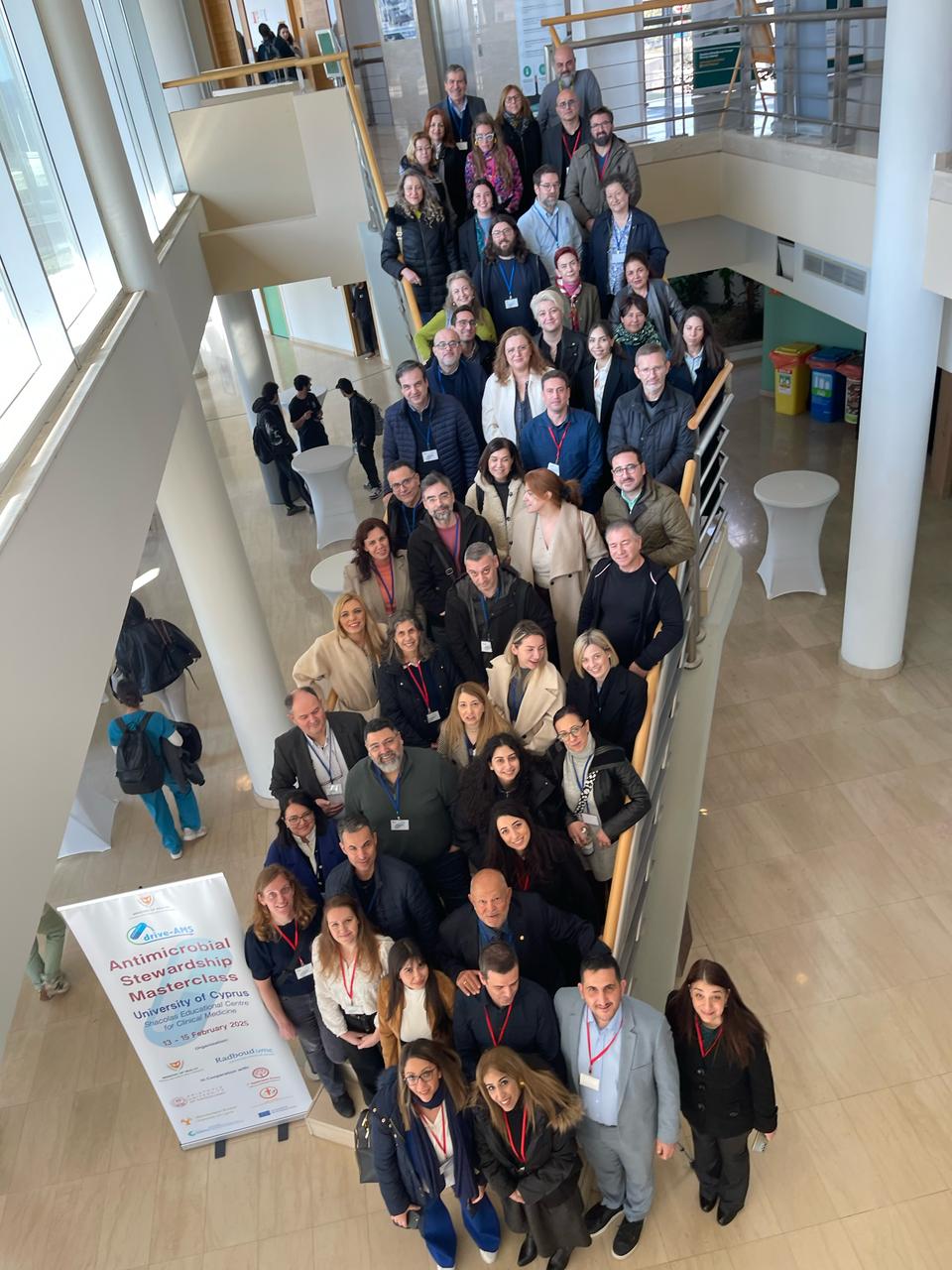
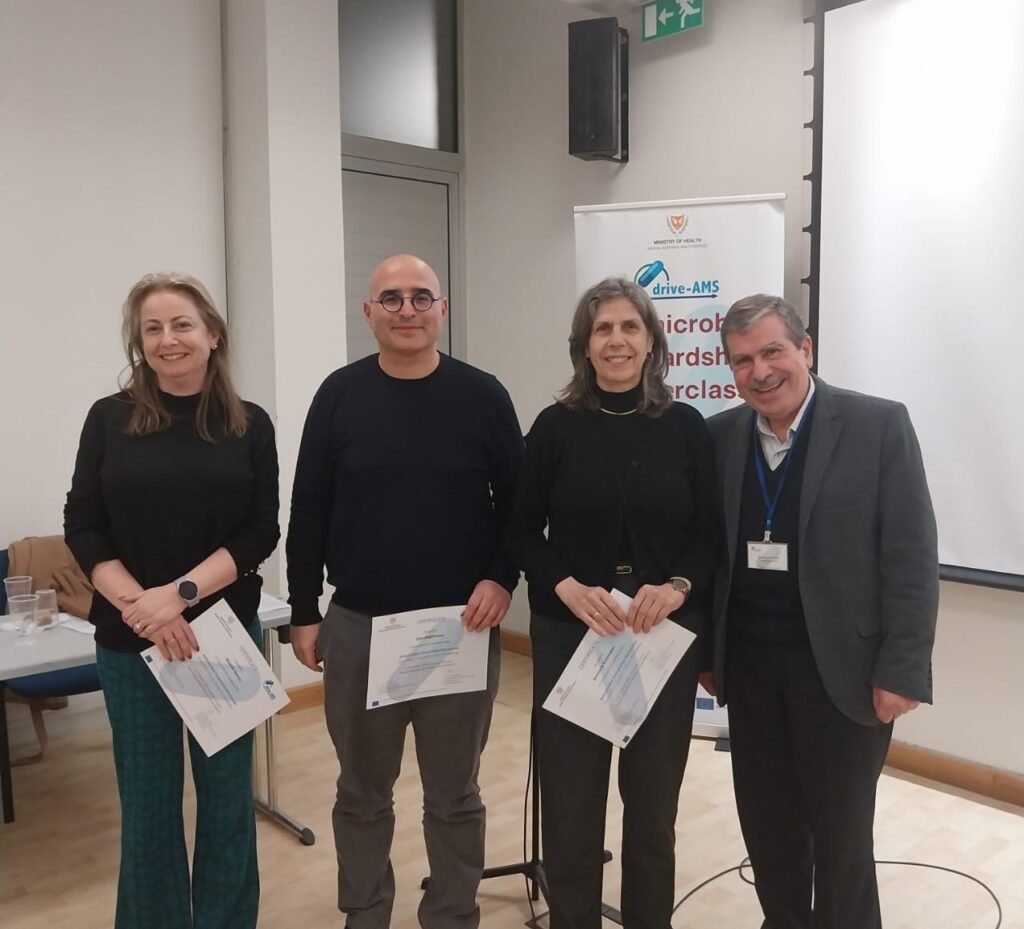
What sets drive-AMS apart is its unique fusion of the AMS Master Class concept, developed by Radboudumc in the Netherlands, and the Global Point Prevalence Survey, coordinated by the University of Antwerp in Belgium. Funded by EU4Health, the program is already being implemented in hospitals in Portugal, Romania, Lithuania and Greece. For the first time in Europe, drive-AMS expanded beyond these four countries, and Em. Prof. Emmanuel Roilides, who heads the Greek drive-AMS team, played a pivotal role in guiding participants in Cyprus through the process, sharing his expertise on AMS implementation in hospital settings.
A hands-on, collaborative approach to AMS training
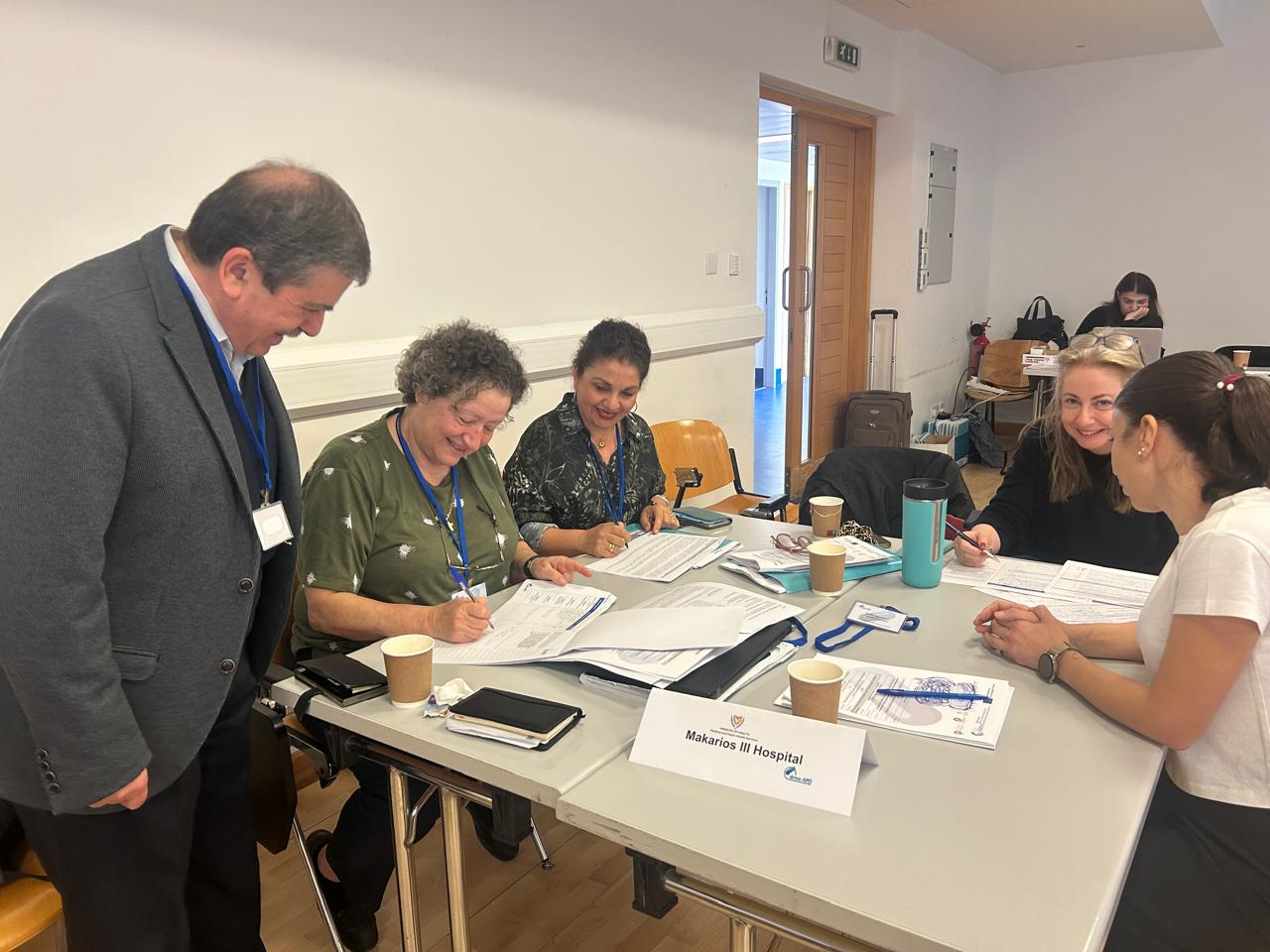
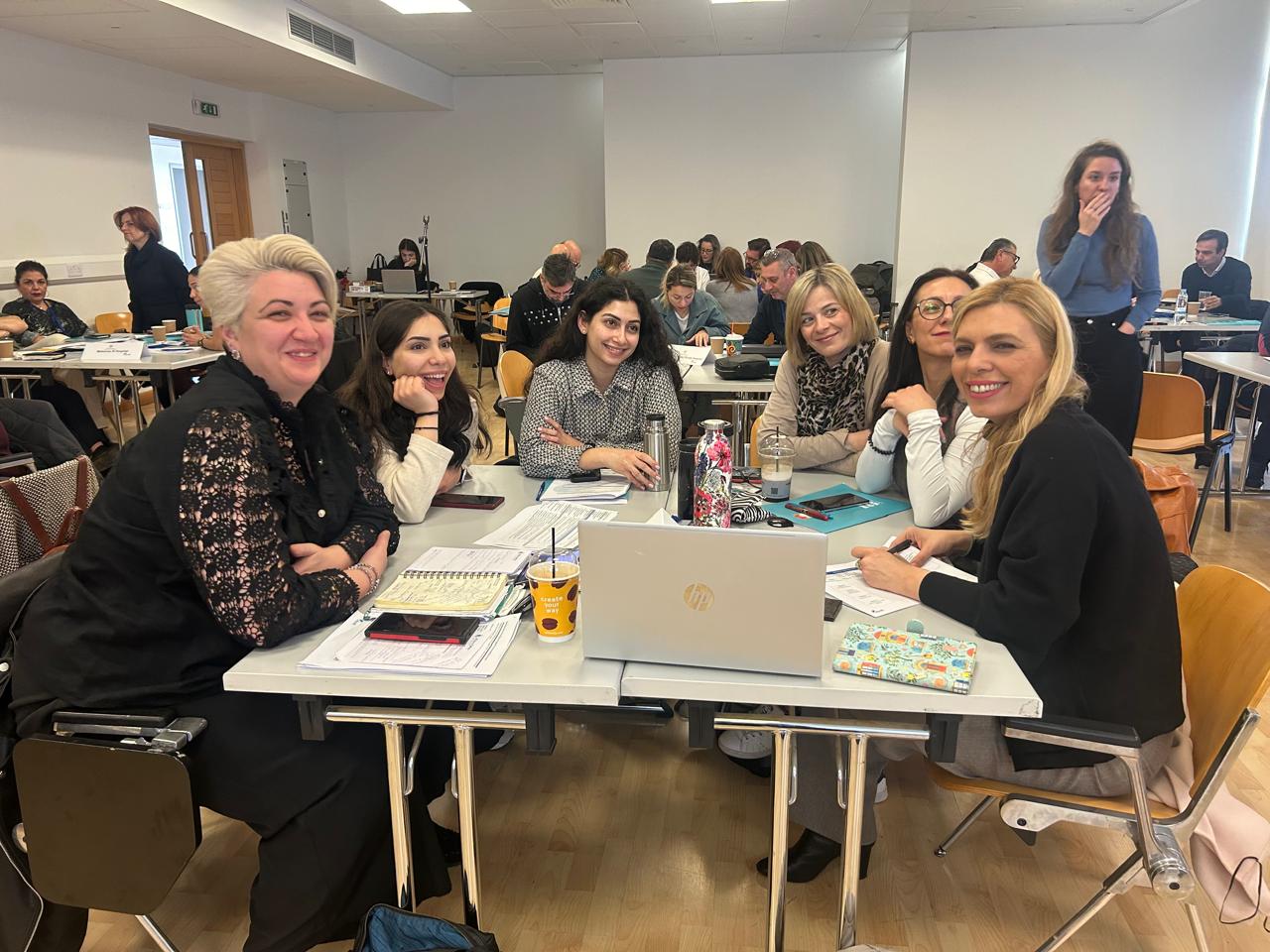
The course was designed with one clear goal: to provide practical, hands-on training for multidisciplinary AMS teams, including clinicians, microbiologists, pharmacists, and nurses. By following a structured, step-by-step approach, participants learned how to measure antibiotic use, analyse prescribing trends, and develop tailored AMS strategies to optimize antimicrobial practices in their institutions.
As always, preparation was key. Prior to the event, teams reviewed the World Health Organization’s practical toolkit on AMS programs and the AMS booklet summarizing the core philosophy of the drive-AMS program. The teams also conducted Point Prevalence Surveys within their hospitals. An online training with instructions on how to conduct a PPS was provided by グローバルPPS on 2 and 10 December 2024. The participant received more information on the Global-PPS feedback reports and instructions on interpreting their results. This data-driven foundation ensured that participants arrived with a clear understanding of their hospital’s antibiotic use patterns, allowing them to develop targeted interventions based on real-world insights.
“I found it extremely useful and interesting, providing high-quality and high-impact information in a concise and inclusive way.
– Course participant
One of the strong aspects of the course was its emphasis on collaboration. Faculty members shared best practices, case studies, and successful AMS strategies from across Europe. But learning wasn’t a one-way street: the participants themselves enriched discussions, engaging in a role-playing interview session, exchanging experiences and challenges, and creating a network of AMS professionals in Cyprus.
Expert mentorship and ongoing support
The course didn’t end on 15 February. Cyprus AMS teams will now roll out their projects in their respective hospitals, backed by continuous expert mentorship. A follow-up webinar is scheduled for April 2025, with additional resources and expert consultations available via the SPICE registry. By maintaining consistent engagement, AMS teams will have the opportunity to showcase their progress, discuss challenges, and receive expert guidance to refine their strategies. A second follow-up webinar will be held in February 2026.
The success of this drive-AMS course reaffirms the critical role structured, data-driven AMS training plays in combating antimicrobial resistance. By fostering a collaborative, evidence-based approach, drive-AMS is empowering Cypriot hospitals to take meaningful steps toward optimizing antibiotic use. More than just a training program, the project represents a commitment to long-term capacity building.